A commercial roof fails at the details, and usually while nobody is looking at it
Shops, offices, churches, warehouses and the buildings along the industrial corridors mostly have low-slope membrane roofs with equipment on them. They rarely fail in the field. They fail at the curbs, the pitch pockets, the terminations and the drains, and they do it quietly until something inside gets wet.
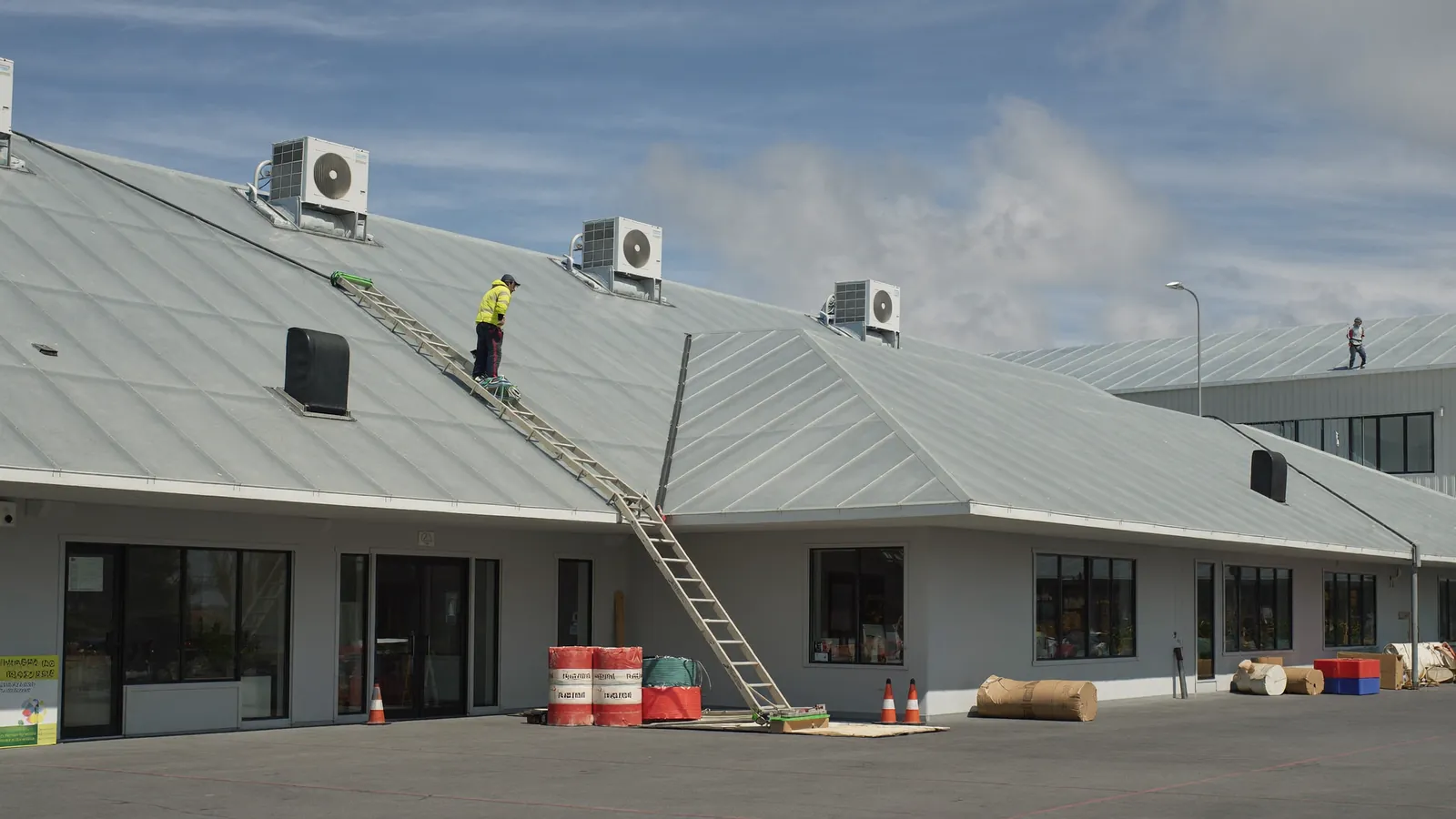
What we work on. Low-slope membrane systems — TPO, EPDM and modified bitumen — which cover most commercial buildings here, plus standing seam and panel metal on the agricultural and light-industrial buildings around the county. Repairs, recovers, full replacements and planned maintenance. Buildings that have to keep operating while the work happens, which is most of them.
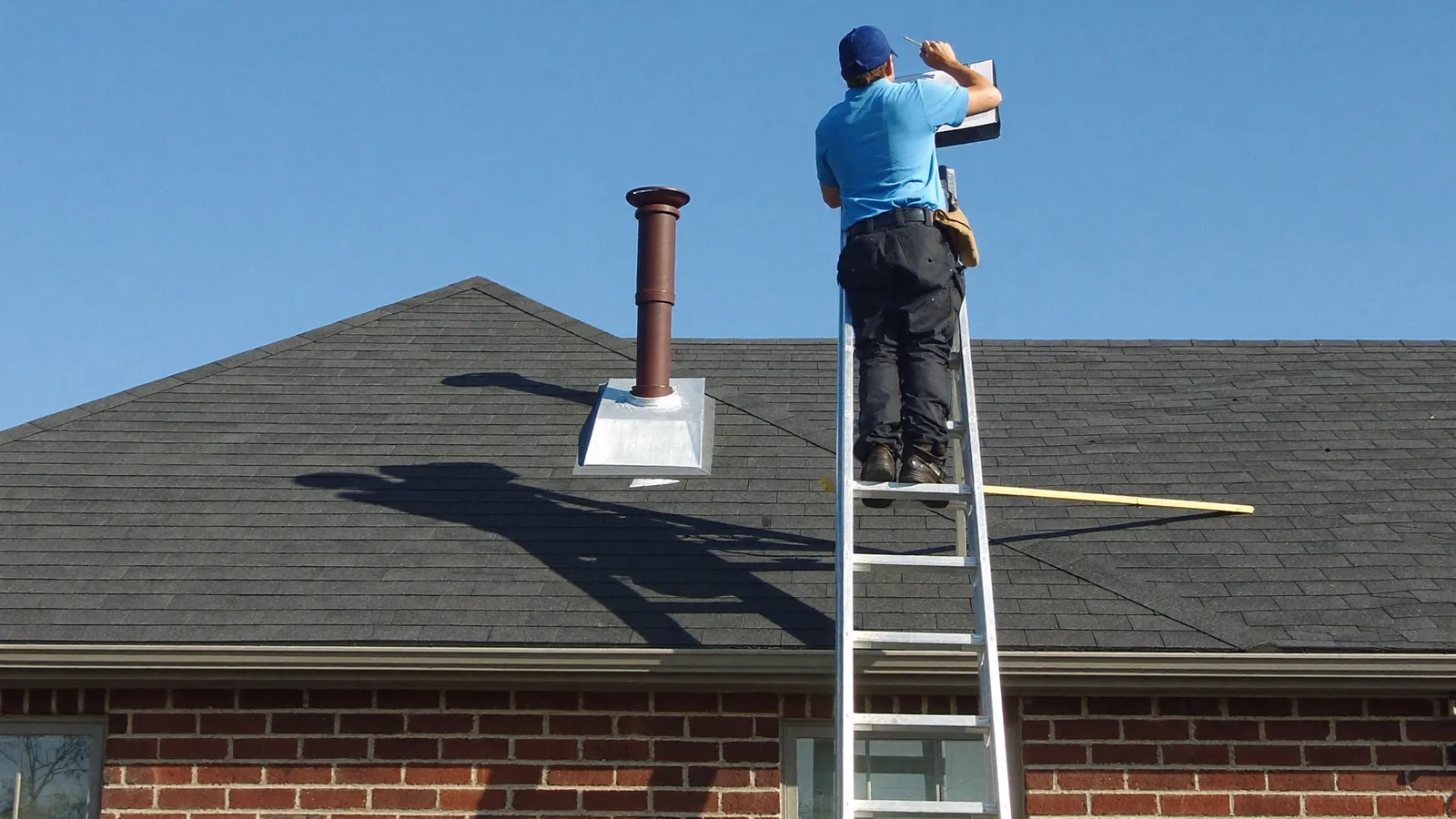
Where commercial roofs actually fail. Rooftop HVAC curbs, where the flashing meets the equipment and where every service contractor who has ever walked up there has put their weight. Pitch pockets around pipe, conduit and antenna penetrations, which are supposed to be topped up and essentially never are. The termination bar at parapet walls. Drains and scuppers, which block with debris and turn a designed-to-drain roof into a designed-to-pond one. And seams, particularly on older adhered systems. In a county taking about fifty-one inches of rain a year, a roof that holds water because a drain is blocked is carrying serious weight it was not designed for.
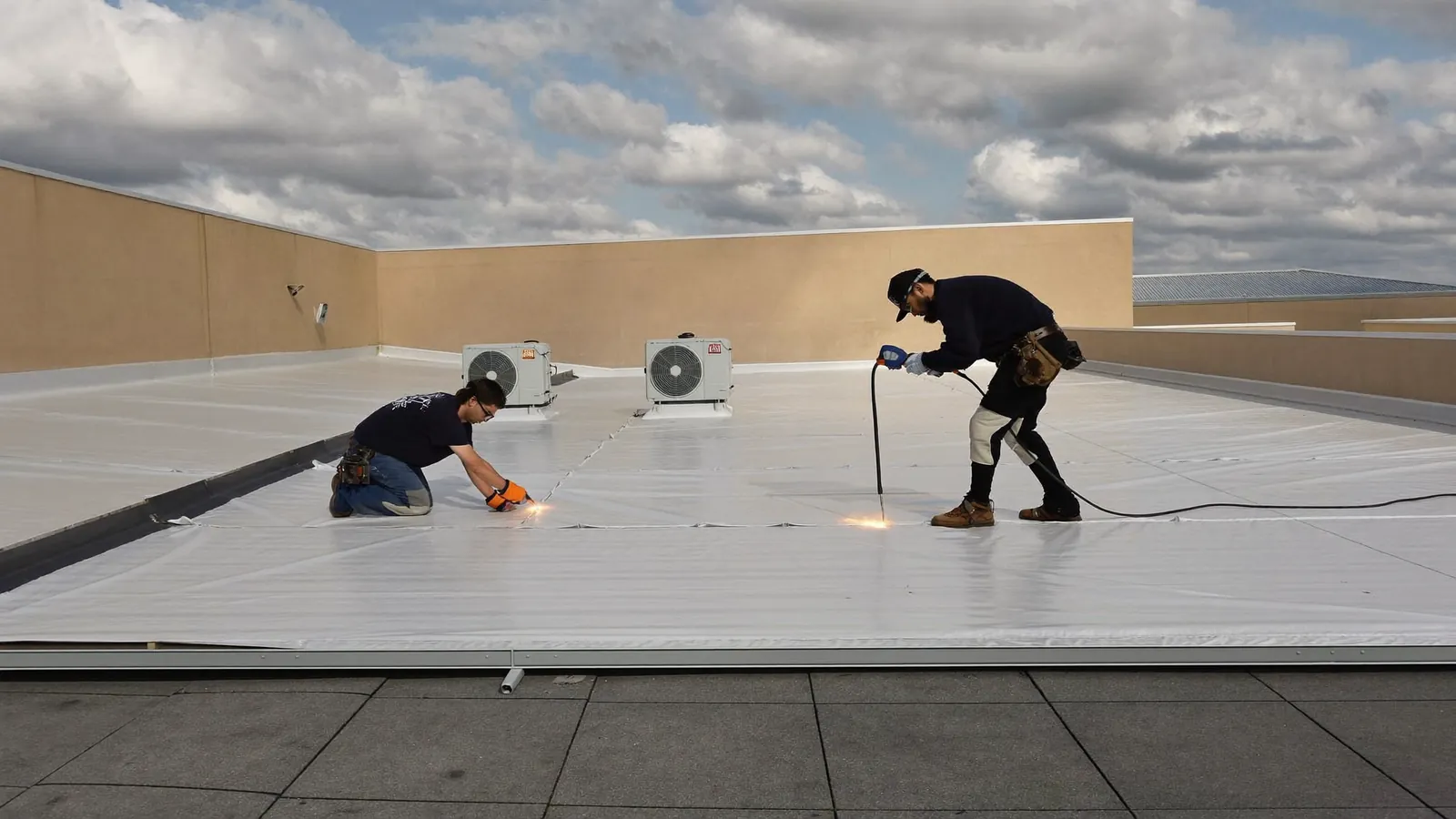
Access and disruption. A retail unit cannot have its entrance blocked during trading hours. A church needs the work done between services and around a funeral. A warehouse needs the dock clear. A tenant fit-out has a lease date. We schedule around those things, and we say up front what we will need and when — crane or lift positions, parking, power, which doors have to stay usable. Tear-off is noisy and torch-applied work carries fire-watch requirements, and both of those are conversations to have before the week starts rather than on the morning.
Planned maintenance is the whole argument. The cheapest commercial roof is the one somebody looks at twice a year. A blocked drain cleared in March costs nothing. The same drain found in September after it has ponded all summer and soaked the insulation is a tear-off. We will put a building on a twice-yearly inspection with a written report and photographs per visit, which also gives a facilities file something to show a landlord, an insurer or a board. For churches and small businesses without a facilities manager, that report is often the only record the building has.
Tennessee requires a state contractor licence for projects of $25,000 and above, which most commercial work exceeds. Verify ours and anyone else's at verify.tn.gov before you let a contract.
What's included
Low-slope systems
TPO, EPDM and modified bitumen repaired, recovered and replaced, specified to the building and the traffic it takes.
The details inspected properly
Curbs, pitch pockets, terminations, drains and seams, which is where commercial roofs genuinely fail.
Wet insulation found before you buy a recover
Test cuts where the deck feels soft, because recovering over wet insulation wastes the whole job.
Scheduled around trading
Access, noise, lift positions and which doors stay usable agreed before the week starts, not on the morning.
Planned maintenance
Twice-yearly inspections with a written report and photographs, which is the cheapest roofing money a building spends.
Documentation for the file
Reports a facilities manager, a landlord, an insurer or a church board can actually use.
Commercial roofing cost in Clarksville, TN
| Job | Typical price | Notes |
|---|---|---|
| Commercial roof inspection and report | Free | Photographs and written findings |
| Planned maintenance, twice yearly | Quoted per building | Report and photographs each visit |
| Low-slope repair | $500 – $3,000 | Seams, flashings, penetrations |
| Curb and pitch pocket rebuild | Quoted on site | The most common commercial leak |
| Drain and scupper clearing and repair | Quoted on site | Prevents ponding damage |
| Moisture survey / test cuts | Quoted on site | Before committing to a recover |
| TPO or EPDM replacement | Quoted by square footage | Includes tear-off and insulation |
| Metal roof, light industrial and agricultural | Quoted on site | See metal roofing |
These are 2026 ranges for Clarksville and Montgomery County, meant for budgeting rather than quoting. Pitch, the number of layers to come off, the condition of the decking and the flashing details all move the number. You get the scope and the price in writing after the inspection, and the inspection is free.
Recent work
Questions we get about commercial roofing
Can you work while we stay open?
Yes, and it is most of what we do. We agree access, noise windows, lift and skip positions and which entrances must stay clear before the job starts. Tear-off is loud and there is no way around that, so for a retail unit or a surgery we will plan the loud phases where they do least damage, including early starts or weekends where that genuinely helps.
Does my roof need replacing or can it be repaired?
Often repaired, and we will tell you honestly which. If the field membrane is sound and the problems are at seams, flashings and penetrations, repair is the right answer and a fraction of the cost. Only wet insulation forces a full tear-off, and that is established with test cuts rather than assertion. We would rather do three repairs over ten years than oversell one replacement.
What causes most commercial roof leaks?
Penetrations and equipment curbs, by a wide margin. Rooftop units get serviced by people who are not roofers, pitch pockets never get topped up, and parapet terminations open slowly. Blocked drains are the other big one, because a low-slope roof that ponds is both ageing faster and carrying load it was not designed for.
How often should a commercial roof be inspected?
Twice a year as a baseline — spring and autumn — plus after any significant storm. Most of what we find on a scheduled visit is cheap to deal with at that point: a seam starting to open, a drain filling with debris, a pitch pocket that has dried out. Found eighteen months later, the same items are a claim and an insulation replacement.
Do you work on churches?
Regularly, and we understand that the building has a calendar that cannot move. Services, funerals and weddings come first and we schedule around them. Church roofs are also frequently a mix of systems added over decades — a slate or shingle main roof, a flat addition, a metal annex — and sorting out what is actually up there is often the first useful thing we do.
Do you provide documentation for our insurer or landlord?
Yes. Written inspection reports with dated photographs, repair records and scope documents, in a form that a facilities file, a landlord's agent or an insurer will accept. For buildings without a facilities manager — small businesses, churches, single-unit landlords — that record is usually the only history the roof has, and it is worth having.