When the water is coming in, the first job is stopping it, not quoting it
Storms here arrive at night as often as not. If a limb has come through the deck, a section has peeled back, or water is running into the house, call and say so. We get a tarp over it, stop the damage from getting worse, and photograph everything. Scope and price are tomorrow's conversation.
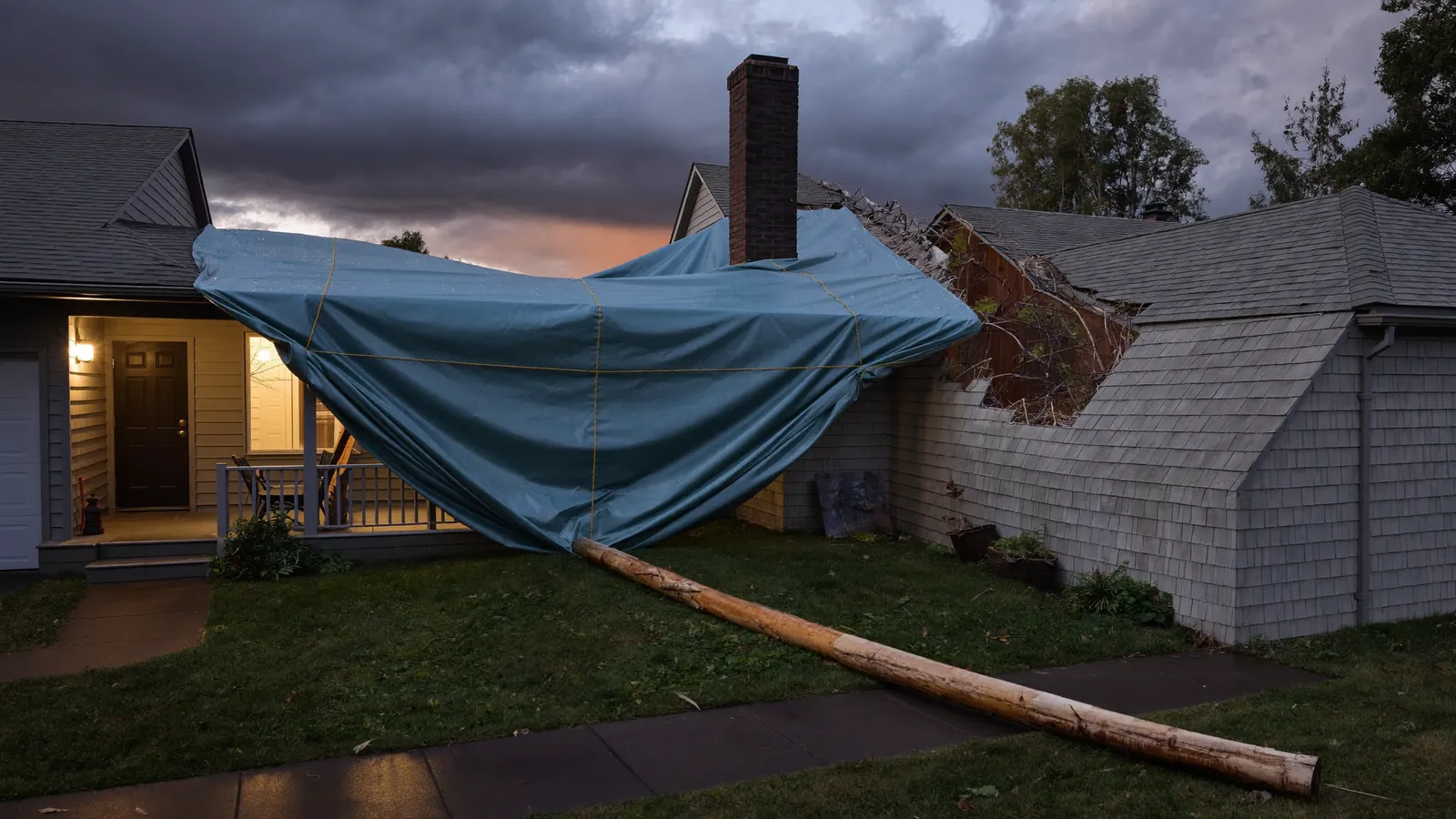
An emergency on a roof is simple to define: water is actively entering the building, or something structural has been opened up and the next rain will do far more damage than the first one did. In Montgomery County that usually means one of four things. A section of shingles peeled off in straight-line winds, leaving underlayment or bare deck facing the sky. A limb or a whole tree has come down and punched through the sheathing. A chimney, ridge or valley has opened in a severe storm. Or an existing slow leak has become a fast one under a heavy rainfall, which happens often here, because fifty-one inches a year arrives in bursts rather than evenly.
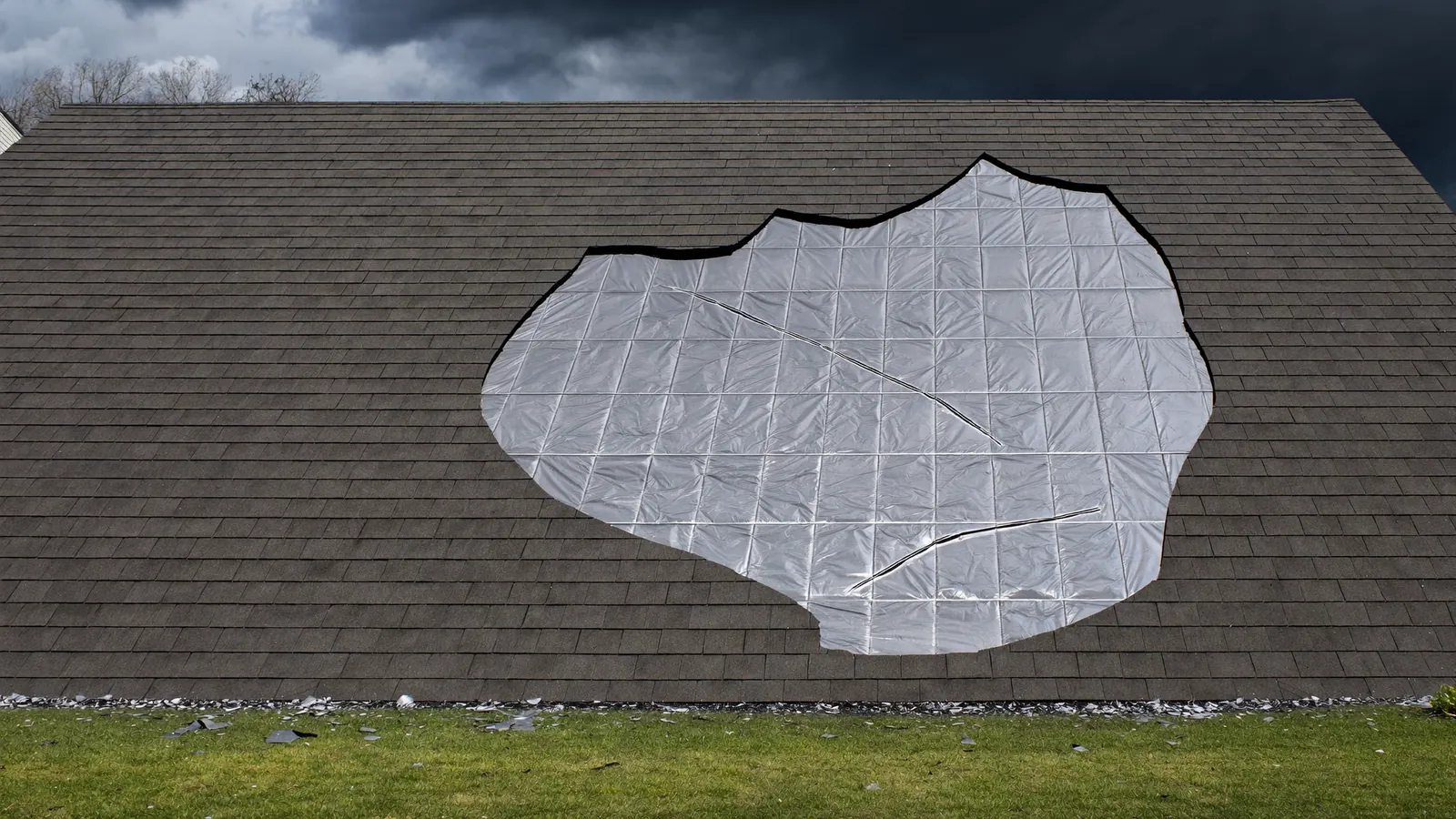
What we do first is temporary and deliberate. A proper emergency tarp is not a sheet of plastic weighed down with bricks. It is heavy-mil poly or a reinforced tarp, run from above the damage over the ridge where the slope allows, wrapped and fastened at the edges to furring strips so that the fasteners are through the tarp and the strip rather than straight through into open deck, and lapped so that water runs over it rather than under it. Done properly it will hold through weeks of weather, which matters if your repair is waiting on an insurance adjuster, a materials order or a run of bad days. Done badly it funnels water into the building and makes the inside damage worse than no tarp at all.
While we are there we document. Photographs of the damage from several angles, the debris, the interior, and anything inside that has been ruined, all dated. If this becomes a claim — and storm damage of this kind usually does — that documentation taken before anything is moved is worth a great deal more than photographs taken a week later. We will give you the file whether or not you use us for the permanent repair.
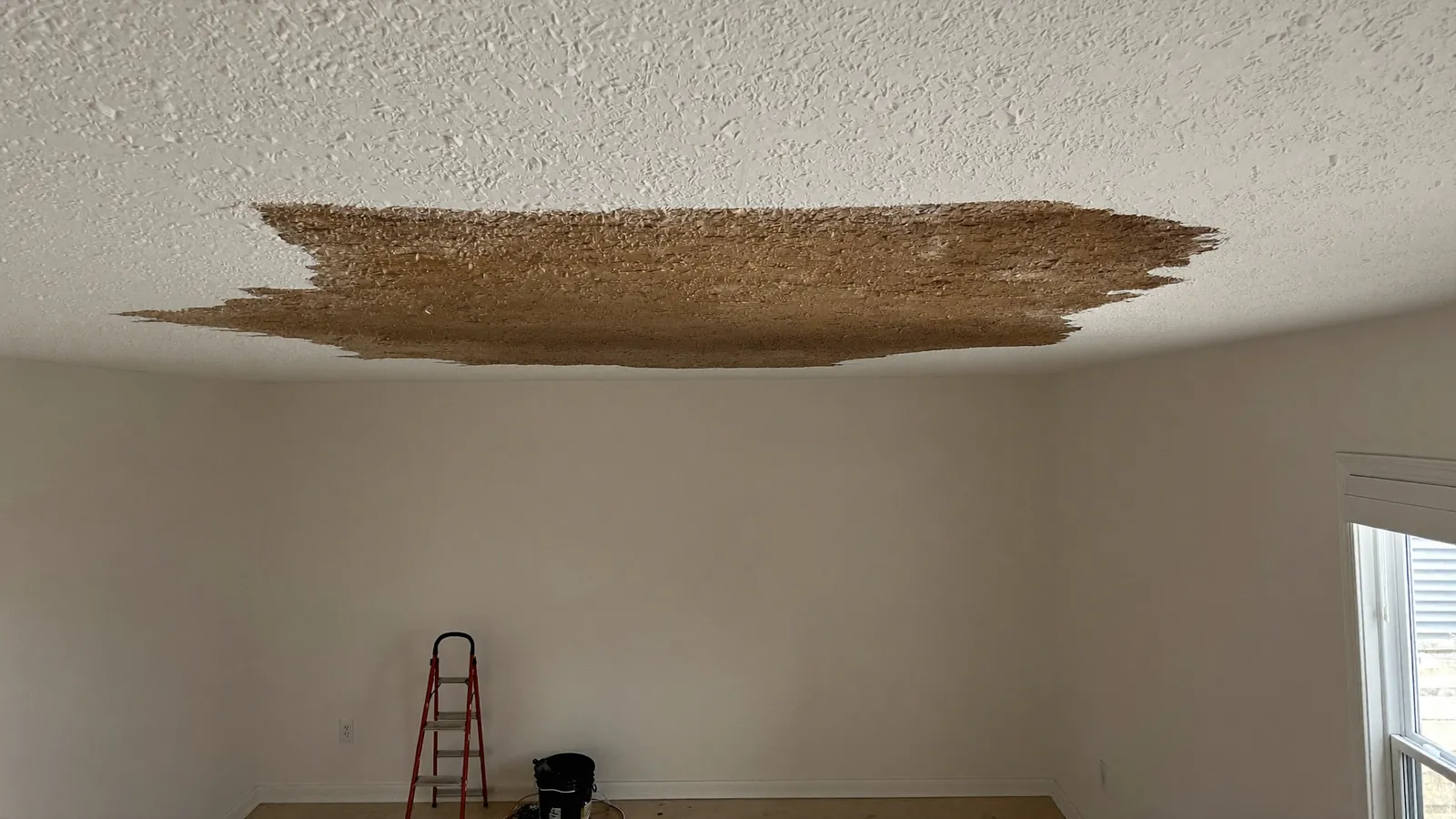
What matters more than the roof. If a tree has hit the house, or you can see sagging ceilings, or there is any sign of electrical trouble — sparking, a burning smell, water running near a panel or a light fitting — get people away from that part of the house and call the utility or 911 first. The same goes for the smell of gas. A roof can wait twenty minutes; those cannot. And please do not climb up to look. The combination of a wet Tennessee roof, a storm-damaged deck you cannot see the condition of, and an adrenaline-filled homeowner at night is how people get badly hurt.
What's included
Answered around the clock
Somebody picks up at any hour, takes the details, and tells you when a crew will be there rather than putting you in a queue.
Tarped to hold, not to look tarped
Reinforced tarp over the ridge where the slope allows, battened to furring strips, lapped so water runs over it. It will hold for weeks if your claim takes weeks.
Documented before anything moves
Dated photographs of the roof, the debris and the interior damage, given to you whether or not we do the permanent work.
Structural risk flagged
If decking, rafters or trusses have been compromised, we say so and tell you which rooms to stay out of until it is assessed.
Interior water contained where we can
Standing water released into buckets rather than left to bring a ceiling down, and soaked insulation identified.
Permanent repair scheduled honestly
A date we can actually keep, including when materials or an adjuster are the constraint. We will not promise tomorrow to get the tarp job.
Emergency roof repair cost in Clarksville, TN
| Job | Typical price | Notes |
|---|---|---|
| Emergency callout and assessment | $0 – $250 | Waived when we do the permanent repair |
| Emergency tarp, single slope section | $350 – $900 | Reinforced tarp, battened and lapped |
| Large or multi-slope tarping | $900 – $2,500 | Steep pitch and height add |
| Tree or limb removal from the roof surface | Quoted on site | Large removals referred to a tree service |
| Temporary decking over a puncture | $300 – $800 | Before tarping, where the deck is open |
| Interior water containment | Included | With any emergency callout |
| Full damage documentation package | Included | Photographs, notes and measurements, dated |
| Permanent repair | Quoted after | See storm damage |
These are 2026 ranges for Clarksville and Montgomery County, meant for budgeting rather than quoting. Pitch, the number of layers to come off, the condition of the decking and the flashing details all move the number. You get the scope and the price in writing after the inspection, and the inspection is free.
Recent work
Questions we get about emergency roof repair
How quickly can you get here?
Same day for an active leak or an open roof, and through the night when the weather has just passed. Be aware that after a county-wide hail or wind event every roofer in Clarksville is triaging, so we will tell you honestly where you sit rather than giving you a time we cannot keep. Active water into the living space goes first, then open decking, then everything else.
Do you charge for the emergency visit?
There may be a callout charge depending on the hour and the distance, and it is stated before we leave the yard so there is no surprise. It is waived when we carry out the permanent repair. The tarp itself is priced by what the roof actually needs, and you get that number before we start.
Will insurance cover the tarp?
Usually. Most homeowner policies cover reasonable emergency mitigation to prevent further damage, and in fact most require you to take reasonable steps to stop ongoing damage. Keep the invoice and the photographs; they go into the claim. Your carrier's exact wording governs, and we will not tell you it is guaranteed.
Can I put a tarp on myself?
We would rather you did not, especially at night on a wet roof. If you are determined and the roof is low, dry and walkable, run the tarp over the ridge rather than stopping below it, fasten through furring strips rather than straight into the deck, and lap the upper edge under the shingles above the damage. Most homeowner tarps fail because water runs underneath the top edge, which puts more water into the house than before.
A tree is on my roof. Do I call you or a tree service?
Both, and the tree service usually first for anything substantial, because lifting a large limb or trunk off a structure safely is their trade and not ours. We can remove light limbs, make the roof safe, tarp the opening and document it. If the trunk needs a crane, we will say so plainly rather than attempt it.
How long can the tarp stay on?
A properly installed reinforced tarp will hold for several weeks and through normal weather, which is usually long enough for an adjuster's visit and a materials order. It is not a roof, and it will not survive a winter. We schedule the permanent repair at the same time we tarp so it does not drift.